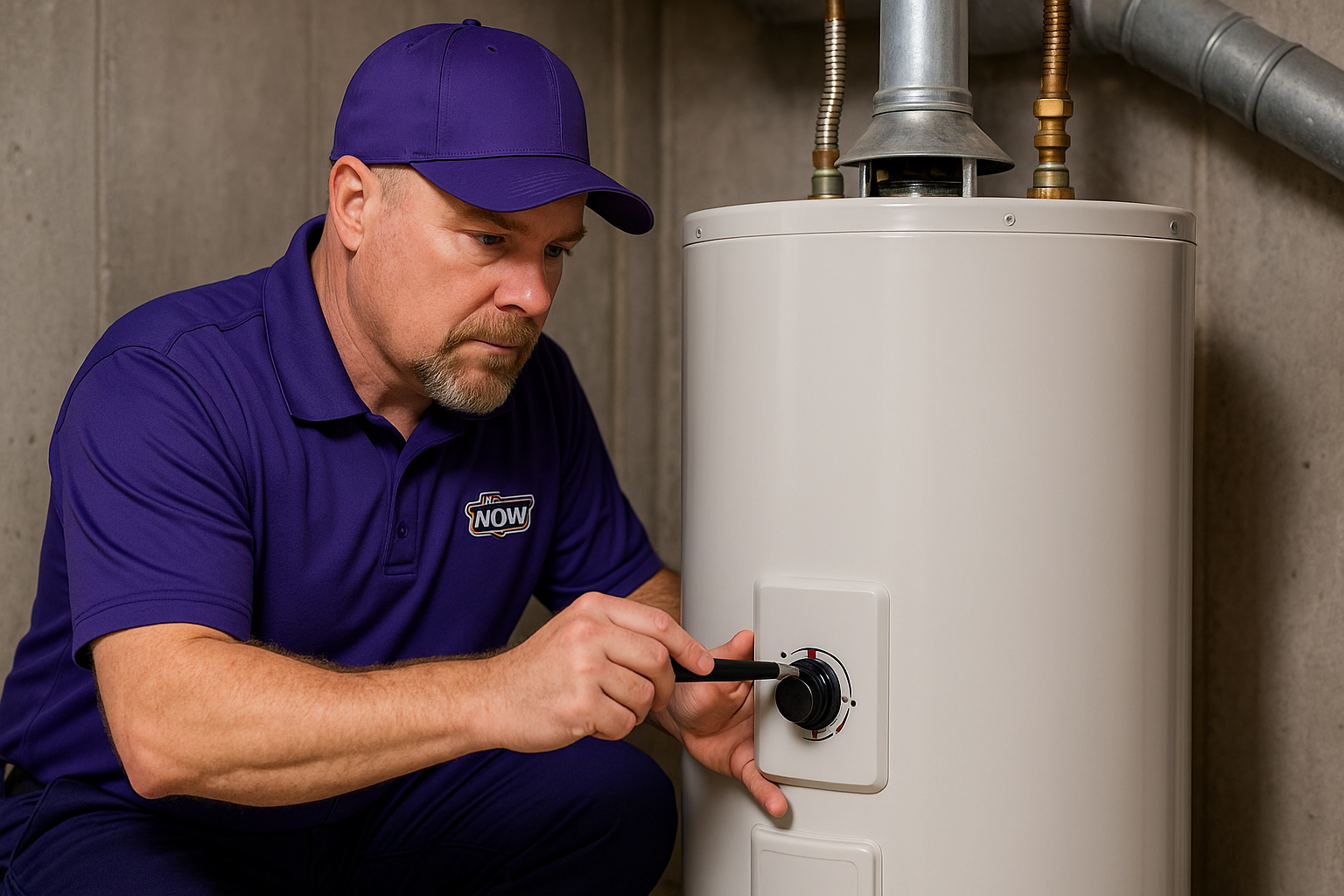
A new model water heater is supposed to provide dependable, consistent hot water on the first day. When your water stays lukewarm, or your new water heater is not heating at all, it’s a clear sign that something’s wrong. Here, most homeowners often fear the worst, such as a complete breakdown or potential replacement.
The fact is that various installation-related problems can affect performance during the initial hours or days. The majority of these issues are common, easy to detect, and simple to fix once you are aware of what to look for.
Let us walk you through the most frequent reasons a new water heater fails to heat properly, how to troubleshoot electric and gas models, and when to call a professional.
Why Your New Water Heater Is Not Heating: Key Causes
Before exploring the issues related to models, it is helpful to get to know the primary causes that influence both electric and gas units. A new water heater has no hot water due to various reasons, such as
- Power or gas isn’t reaching the unit
- The tank wasn’t filled before power was applied
- Air is trapped inside the tank
- Thermostat settings are too low
- Wiring or installation connections are not secure
- A heating element or burner component is faulty
- A dip tube is damaged or misplaced
- Heat-trap fittings were installed incorrectly
Most problems show up right after installation, which makes early inspection important.
How to Troubleshoot an Electric Water Heater
If your electric water heater is not working after installation, the problem lies deeper. The issue could stem from the heating elements or an improper electrical flow. When either of these components fails, the unit won’t heat the water properly. When something in that chain goes wrong, the unit will not heat properly. Here’s what to check first.
1. Check the Power Supply
Start by confirming the water heater is actually receiving power.
- Make sure the circuit breaker is on and not tripped.
- Some models come with their own power switch; ensure that the power switch is in the on position.
- If the power comes back and the water is still not heating, proceed with the steps below.
Any minor breakage in the breaker may cause the heating elements to hitch.
2. Don’t Power On an Empty Tank
A new water heater must be fully filled with water before the power is turned on. If not, the heating elements can ‘dry-fire’ and burn out immediately.
To confirm proper filling:
- Check that the cold-water inlet valve is fully open.
- Listen for the sound of water moving into the tank.
- Open a hot-water tap in the home until water flows smoothly without air pockets.
When the element is dry-fired, there is a possibility that it is already damaged and needs replacement.
3. Check the High-Limit Reset Button
Electric heaters come with a safety switch known as a high-limit reset button.
If the unit induces an overheating or wiring problem, this button will be tripped, and power will be disconnected to the elements.
A red reset button is usually located at the back of a thermostat cover. Press it firmly and listen for a click. If it immediately trips again, there may be a deeper electrical problem that needs attention.
4. Confirm the Thermostat Settings
Most of the water heaters are preset at low temperatures when they leave the factory.
Turn the thermostat on and set it to a minimum of 120°F. When it is set too low, the water might even seem to be lukewarm, though the heater is operating adequately.
It is better not to raise the temperature excessively to minimise the chance of scalding.
5. Inspect the Wiring Connections
Loose or poorly connected wiring can stop the elements from receiving the voltage they need.
During installation, wires may shift or not tighten fully. Look for:
- Loose screws
- Disconnected wires
- Burn marks or damaged insulation
If anything looks unsafe, turn off the power at the breaker and contact a plumbing repair technician.
6. Test the Heating Elements
Start with testing all the heating elements of the heater, including resistive coils, thermostat, etc. If the water still doesn’t heat, the heating elements themselves may be faulty.
A simple continuity test with a multimeter can confirm whether an element is working. If there’s no continuity, the element needs replacement.
Even new units can have defective heating elements due to water heater temperature issues or improper installation.
How to Troubleshoot Gas Water Heater Problems
Gas water heaters depend on a stable gas supply, a working pilot light, and proper burner operation. When any of these fail, heating efficiency drops. Here are a few troubleshooting ideas to fix your gas water heater.
1. Check the Pilot Light
A weak or extinguished pilot light is one of the most common reasons a new gas water heater doesn’t heat.
- Confirm that the pilot is lit and burning steadily.
- If it’s out, relight it using the instructions on the heater.
- If it won’t stay lit, the thermocouple or pilot assembly may be faulty.
A newly installed unit may have air trapped in the gas line, which can cause the pilot light to go out until the air is cleared.
2. Make Sure the Gas Supply Is On
Look at the gas shutoff valve and make sure it’s in the on position. If the valve is closed, the burner and pilot will never ignite.
If the pilot still doesn’t stay lit after confirming the supply is on, the gas control valve could be defective.
3. Look for Gas Leaks
If you smell gas near the unit, turn it off immediately.
A gas leak can come from:
- Loose fittings
- Poor connections
- A damaged control valve
Do not attempt to relight the pilot until a licensed technician inspects the system.
4. Check for a Tripped Thermal Switch
Some gas water heaters include a thermal switch that shuts the system down when it senses unsafe temperatures.
A flashing light often indicates this issue. Once tripped, the heater won’t run until the switch is reset or replaced.
5. Inspect the Burner Area
If the pilot is lit but the main burner does not ignite, the problem may lie in the burner itself. Blocked ports, poor alignment, or a defective gas valve can prevent ignition.
Other Possible Causes Behind Poor Heating
Sometimes the issue isn’t electrical or gas-related. A few hidden installation errors can also affect water temperature. For instance
1. A Faulty or Misplaced Dip Tube
The dip tube pushes cold water to the bottom of the tank, so hot water stays at the top.
If the tube is broken, cracked, or installed incorrectly:
- Cold water mixes with hot water
- The water feels lukewarm
- The tank never reaches full temperature
Dip tube issues are more common than most people think, even with new heaters.
2. Sediment Transfer from Old Plumbing
While a new tank is clean, plumbing connected to an old system may release sediment into the new heater.
Sediment can:
- Cover the heating element
- Reduce heat transfer
- Slow down recovery time
A quick flush can help clear the tank.
3. Incorrect Installation of Heat-Trap Nipples or Fittings
Heat-trap nipples help improve efficiency by stopping heat from escaping the tank.
But if they’re installed backward or incorrectly, water flow becomes restricted and temperature drops.
This is a standard installation error that can be fixed with proper alignment.
When Should You Call a Professional?
If you’ve checked the power, gas supply, thermostat settings, wiring, pilot light, and basic components, and the water still doesn’t heat, it’s time to contact a licensed technician.
Professional water heater installation services in Denton, TX can:
- Test voltage and gas pressure
- Inspect internal components
- Replace burned elements or malfunctioning valves
- Verify correct installation
- Ensure the system is safe to operate
Early professional help prevents long-term damage and protects your warranty.
Final Thoughts
A new water heater that is not heating properly can be frustrating, but the reason is simple to locate. All you have to do is find the actual perpetrators behind it. Once you have the correct steps taken and professional support provided at the right time, your new water heater will begin to heat up your water reliably as it should.
If it is still not working, call RITE NOW AC • Heating • Plumbing now. With years of experience, we have mastered the installation process that guarantees high efficiency without any failure. Moreover, we also provide top-notch repair and maintenance services so you never run out of hot water in Denton’s winter.
Book our HVAC & plumbing services in Denton, TX by visiting our website now.