
What Should Spring Air From Your AC Smell Like?
Spring in Denton should smell like fresh air, not a mystery from your AC. Different odors can signal dust, moisture, mold, chemicals, or drainage issues, and knowing which is which helps you protect your comfort, health, and wallet before allergy season spikes.
Spring air inside your home should feel light and clean, not smell like a mystery every time the AC kicks on. Odd odors are often your system’s way of asking for help, and knowing what each smell might mean can protect your comfort and your health.
We will walk through the most common AC odor red flags, how to tell dust from possible mold, when chemical smells pose a real danger, and what you can safely check on your own. We will also explain the difference between needing duct cleaning and needing coil or condensate drain service, plus how regular maintenance helps Denton homes breathe easier.
Common red-flag odors from AC systems include:
- Light dusty smell
- Musty or earthy smell
- Chemical or sweet smell
- Dirty-sock smell
- Rotten or sewer-like smell
Understanding which smells are minor and which hint at bigger issues helps you decide if a quick check is enough or if it is time for professional help.
Is That Musty AC Smell Just Dust or Hidden Mold?
A brief, dusty scent at startup is often normal; a persistent wet-cardboard or basement odor usually indicates moisture and possible mold in the filters, ducts, or the air handler.
When an AC or heater has been off for a while, a short dusty odor at startup can be normal. Dust collects on the coil and inside the cabinet, then heats up or cools rapidly, producing a faint “burning dust” smell.
That kind of smell should:
- Be mild
- Fade in 15 to 30 minutes
- Does not appear every single time the system runs
A different kind of smell is that wet-cardboard, damp-basement, or dirty-laundry odor. That often points to moisture sitting where it should not be, which can allow mold or mildew to grow. Common spots include:
- A filthy or damp air filter
- Inside ductwork, especially in humid areas
- Around the indoor unit, coil, or drain pan
Pay attention to how you feel when the AC runs. If family members notice more:
- Sneezing or coughing
- Headaches or stuffy noses
- Itchy eyes or worse allergies
When the system is on, that musty smell might be more than just dust. It is a sign that the system and the air in your Denton home need attention.
Does a Chemical or Sweet AC Smell Mean a Dangerous Leak?
Unusual chemical, sweet, or solvent-like AC odors are not normal and can signal refrigerant or component issues. Turn the system off and call a pro; this one is not DIY.
Some homeowners describe chemical AC smells as:
- Nail polish remover
- Sweet or chloroform-like
- Sharp, solvent, or cleaner-like
Those can point to refrigerant issues or other internal system problems. Refrigerant is not something a homeowner should ever handle. If you smell this type of odor near supply vents or around the indoor or outdoor unit, turn the system off and have it checked by a licensed HVAC technician.
Sometimes the AC is just spreading a smell that started somewhere else, like:
- Strong cleaners or disinfectants
- Fresh paint or stain
- New carpet or adhesives
- Pesticides used inside or right outside
If the smell clearly matches a product you just used and fades once the product is put away and the area is aired out, that is different from a steady chemical odor that only shows up when the AC runs. When in doubt, treat chemical smells near your AC as a safety issue.
What AC Smells Can You Safely Troubleshoot Yourself?
You can handle filter changes, light cleaning, and a quick look for standing water. Strong, sudden, electrical, or chemical smells call for a licensed HVAC technician instead.
There are a few simple checks that are usually safe for most homeowners:
- Turn off the power and replace dirty air filters
- Gently vacuum dust from supply and return grilles
- Clear boxes, furniture, or clutter from around indoor and outdoor units
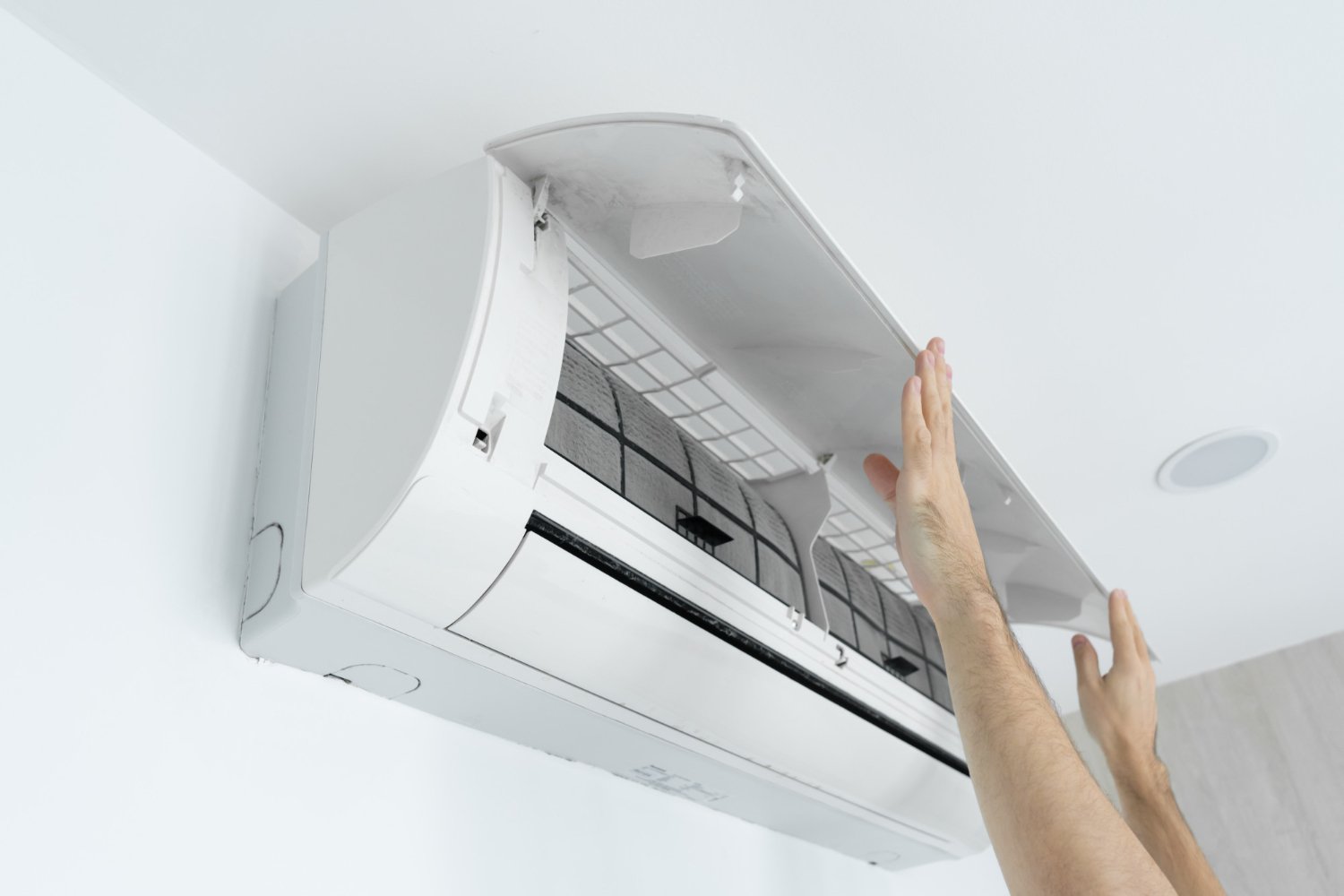
You can also take a careful look (without opening panels you are not comfortable with) for:
- Obvious standing water around the indoor unit
- Wet or sagging insulation near the air handler
- A drain line that you can see that looks slimy or clogged
End DIY and call a pro right away if you notice:
- Strong burning, hot plastic, or electrical smells
- Chemical, sweet, or nail-polish-like odors
- Visible heavy mold on vents or inside the unit
- Water stains on ceilings or walls near ducts or the air handler
Those signs call for trained eyes, tools, and cleaning products that are safe for HVAC systems.
Do You Need Duct Cleaning or Coil and Drain Service?
Musty smells in many rooms often point to duct issues. Odors strongest at the unit or nearby vents, plus water trouble, usually mean dirty coils or a clogged condensate drain.
Not every bad smell means you need duct cleaning, and not every smell is fixed with coil cleaning. Here is a quick way to tell them apart.
Duct cleaning makes sense when:
- You see heavy dust or debris at multiple vents
- The musty odor seems to come from every room
- There has been pest activity inside the ducts
- You recently had a big construction or remodeling project
On the other hand, coil and condensate service is usually smarter when:
- The smell is strongest near the indoor unit or a nearby vent
- You notice a “dirty sock” odor that gets worse with cooling
- There are signs of water leaks or rust around the air handler
- The condensate drain pan is wet, slimy, or overflowing
During a professional visit, technicians can:
- Inspect visible ductwork and openings
- Clean the evaporator coil surface
- Clear and flush the condensate drain line and pan
- Check refrigerant lines and pans for issues
- Test airflow and drainage so moisture can leave your home instead of sitting in the system
Getting the right service for the right symptom saves time and helps the odor go away long-term.
How Can Preventive Maintenance Prevent AC Odors?
A spring HVAC tune-up catches dust and drainage issues early, so Denton’s heat and humidity do not turn your system into a mold factory that perfumes your whole house.
Regular maintenance lets a technician spot small problems early. That includes things like:
- Coils starting to collect dirt and biofilm
- Drain lines that are beginning to clog
- Weak airflow that lets moisture linger too long
In a climate like Denton, with warm temperatures, humidity, dust, and heavy spring pollen, AC systems work hard. Moist air moving across a cold coil will always make condensate water. The goal is to keep that water draining and the surfaces clean so it does not become a mold factory.
A good maintenance visit can:
- Help the system cool more efficiently
- Reduce strain on motors and components
- Support better indoor air quality
- Lower the odds of mid-summer air conditioner repair in Denton, TX
That means fewer surprises and fewer strange smells right when you need cooling the most.
Frequently Asked Questions About AC Odors and Air Quality
A brief musty or dusty smell can be dust and mild moisture burning off. If it fades within 15 to 30 minutes and does not return often, it is usually normal. If it is strong or persistent, have the system checked.
Dirty-sock odor usually means bacteria or mold on the evaporator coil. It is not always an emergency, but it can bother people with allergies or breathing issues. A professional coil cleaning helps protect both comfort and efficiency.
Many homes do not need duct cleaning every year. Every few years can be enough, or sooner if you see visible debris, have renovations, deal with pests, or notice dust and odors coming from several vents at once.
Yes, some refrigerants can cause a sweet, chloroform-like, or chemical odor. If you suspect this, turn the system off and call a licensed HVAC pro. Refrigerant work is not safe for DIY.
A dirty filter can trap odors, restrict airflow, and retain moisture near the coil. Regular filter changes often reduce mild odors and help your system breathe better, especially during high-pollen Denton spring months.
A short dusty burning smell at first startup can be normal. A strong, sharp, or ongoing burning or electrical smell can point to wiring, motor, or component issues and should be checked by a professional right away.
Yes. When the drain clogs, water can back up into the pan or the surrounding area. Standing water is perfect for mold and mildew, leading to musty odors around the unit and nearby vents.
A small amount of diluted bleach or vinegar is sometimes used to help maintain drains, but using too much or too often can harm parts. It is safer to let a technician inspect, clear, and properly treat the line.
Call a pro if odors are strong, sudden, chemical, or burning, or do not go away; if you see water where it does not belong; or if anyone experiences headaches, dizziness, or breathing issues when the system runs.
Yes. Keeping filters clean, coils washed, and drains clear reduces the dust, moisture, and buildup that cause musty or dirty-sock odors, so your home smells more like spring and less like a mystery every time the system starts.
Get Fast, Reliable AC Repair Before The Texas Heat Builds
If your system is struggling, Rite NOW A/C, Heating & Plumbing can restore comfort to your home with expert air conditioner repair in Denton, TX. We respond quickly, explain what we find in plain language, and give you options that fit your budget. Whether it is an urgent breakdown or a small issue you want checked before it gets worse, we are ready to help. For scheduling or questions, contact our AC repair technicians today.