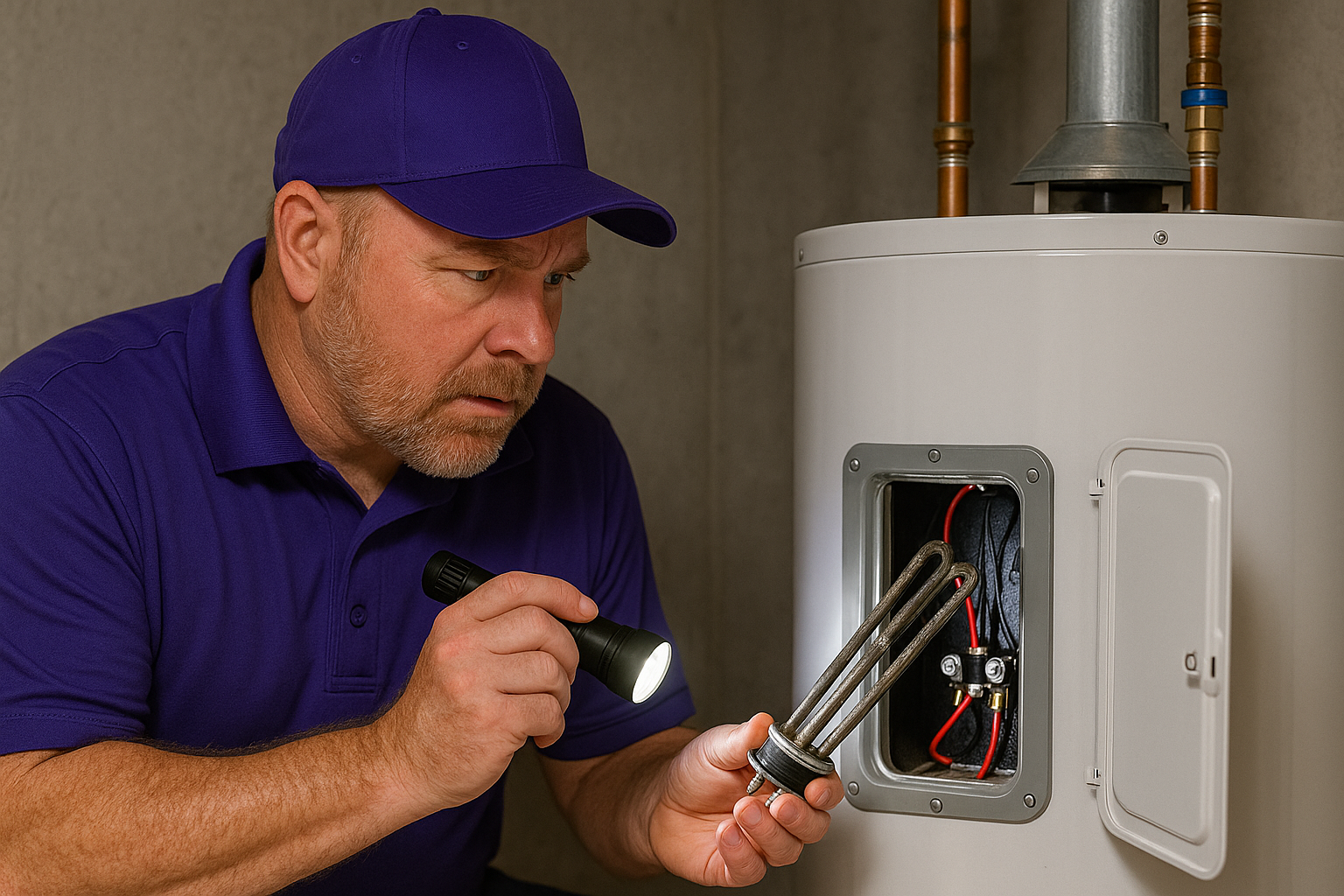
How would it feel to wake up to a cold shower when all you needed was a warm and relaxing morning to start your day? That’s what happens when your water heater’s heating element stops working. A water heater heating element failure can happen more often than you think, leaving you without hot water when you need it most. Addressing it early can prevent unexpected disruptions.
But don’t worry! Let’s get into the causes of heating element failure and how you can prevent this aggravating occurrence in your home.
Common Causes of Water Heater Heating Element Failure
There are several causes of failure of the water heater heating element. Some of the most common causes include:
1. Mineral Scale and Sediment Build-Up
One cause of water heater heating element failure is hard water. Hard water contains minerals like calcium and magnesium. During water heating, these minerals are likely to deposit on the heating element as scale. The accumulated scale insulates the heating element, so it can no longer transfer heat to the water effectively. This ultimately causes the component to overheat and burn out.
Did you know? According to the Water Quality Association, scale deposits are a typical indicator of hard water that eventually leads to sediment buildup in water heaters.
2. Dry Firing
Another reason heating elements fail is dry firing. This occurs when the power is switched on before the water heater tank is filled with water. The heating element is in contact with air rather than water. When this happens, the element heats up very quickly because there is no water to absorb the heat. Continuous dry frying can ultimately lead to heating element burnout, requiring a professional plumbing repair.
3. Electrical Issues
Your water heater’s heating element requires electricity to function properly. Therefore, any electrical disruption can cause the element to burn out. Power surges, faulty wiring, or a malfunctioning thermostat can prevent proper heat dissipation or cause extreme temperatures, leading to the failure of the heating element. Lightning strikes or electrical storms can also cause sudden voltage spikes that damage the element.
4. Corrosion and Age
Over time, heating elements may become corroded due to constant water exposure. Corrosion weakens the element and may cause internal shorts, preventing it from working effectively. Moreover, the more time the heating element is used, the more susceptible it is to wear and tear, making it highly likely to fail.
5. Sediment Accumulation in the Tank
The heating element can be buried by sediment that builds up at the base of the water heater tank. If the component is filled with sediment, it cannot heat the water effectively, so it will have to work harder. This extra pressure may later lead to the element burning out.
6. Wrong Size Of Water Heater
Lastly, if your water heater is the wrong size for your home, it can cause the heating element to burn out faster. For example, if your home is large and you’ve installed a small water heater, or if the unit is too large for a smaller space, the added strain from frequent usage and voltage fluctuations can overload the system. This can ultimately lead to the heating element burning out or even a complete system failure.
Signs of a Burnt Heating Element
Several symptoms indicate your water heater’s heating element may be failing. These burnt-heating-element symptoms can help you troubleshoot before a total breakdown.
1. No Hot Water
A lack of hot water is the most evident indication of a burnt heating element. When you stop getting hot water out of your water heater, the heating element may have burned out.
2. Warm Water That Doesn’t Last Long
If your water becomes warm and then cools quickly, the heating element may be partially operational or have problems.
3. Strange Noises
Hissing or popping noises coming from the water heater can indicate that mineral deposits have built up on the heating element. The sound is a result of the water under the sediment heating up and boiling.
4. Tripped Circuit Breaker
The circuit breaker may also trip due to a burnt heating element. This occurs when the aspect draws more current than it should, which strains the electrical system.
How to Prevent Heating Element Failure?
Although the specific reasons for the heating elements’ failure are beyond our control, there are precautions you can take to prolong your water heater’s lifespan and avoid element burnout.
1. Flush Your Tank Regularly
Flushing your water heater tank is one of the most effective ways of avoiding the deposit of mineral scales. Flushing the tank removes sediment and scale that accumulate at the bottom, allowing the heating element to operate effectively. It is advisable to empty the tank every 6 months to 1 year.
2. Check for Scale Buildup
Periodically inspect the heating components for scale. The appearance of chalky deposits indicates that your water is hard, and you need to wash the elements with vinegar or a descaler. This will help prevent scale from insulating the element and causing overheating.
3. Install a Water Softener
If there is hard water in your area, a water softener can be installed to reduce the mineral content of the water. This will also help prevent scale buildup and extend the life of your heating element.
4. Ensure Proper Installation
One should always check whether the water heater has been fitted correctly. Leaving the tank full of water before switching on the power can cause a dry-firing condition. In addition, during maintenance, one should always ensure that air is vacuumed from the system to avoid bubbles.
5. Monitor the Thermostat and Wiring
Make sure that the thermostat is in good condition. If the thermostat is faulty, it may cause the element to overheat. Also, inspect the wiring and connections, and ensure there are no loose or faulty connections that could cause electrical problems.
Things You Can Do for Heating Element Troubleshooting
When you feel your heating unit is not operating correctly, there are two things you can do to diagnose electric water heater element problems before calling a professional.
- Test the Thermostat: The thermostat should be set to the correct temperature and functioning correctly.
- Check the Wiring: Check for any loose wiring or any evidence of damage.
- Check Heating Element: Use a multimeter to verify the heating element is continuous. If it is not running continuously, the element is burned and should be replaced.
- Test Sediment: If sediment is present in the tank, empty the tank and rinse the elements.
Conclusion
The heating element of a water heater can burn out due to several reasons, including mineral scale deposits, dry firing, electrical issues, and corrosion. In case of a water heater heating element failure or if you need help with troubleshooting, do not hesitate to call a professional. The healthy maintenance practice will help ensure your water heater is functioning correctly and save you from costly repairs.
When your water heater’s heating element fails, you need it fixed fast! RITE NOW AC • Heating • Plumbing offers same-day water heater repair services with dependable local professionals. Whether you need a standard or advanced system, we’ve got you covered with honest pricing and reliable solutions. Schedule with professionals to diagnose and fix your system’s burnt heating element by booking our HVAC & Plumbing Company in Denton, TX, now!